Chungmann (Manny) Kim
My research examines how economic, political, and environmental disturbances affect food security, nutrition, and health, and how the systems designed to measure and respond to these crises perform in practice. Using causal inference methods, I study both the direct welfare effects of shocks on vulnerable populations and the downstream effects of classification systems, such as IPC, on where aid actually flows, work that treats humanitarian data infrastructure itself as an object of empirical scrutiny. I also develop machine learning and NLP pipelines for triangulating disparate, low-quality data sources into more timely and accurate vulnerability assessments.
I completed my Ph.D. in Applied Economics at the University of Illinois Urbana‑Champaign. [View Full Curriculum Vitae →]

Research Interests
Food Security, Nutrition, and Health
Drivers and measurement of acute hunger, dietary diversity, agricultural systems, and the intersection of conflict, environmental shocks, displacement, and health.
Connected Research:
· Hidden Hunger (Nature Food, 2025) [link]
· Inside the Black Box (Food Policy, 2025) [link]
· Early-Year Milk Price & Child Stunting in Zambia [link]
· Agricultural Systems & Diets in Viet Nam (Food Security, 2022) [link]
· Economics of the Soy Kit (Food & Nutrition Bulletin, 2021) [link]
· Multidimensional Food Security Indicators
· Climate Change, Conflict, Displacement and Health in Mali and Iraq (Center for Humanitarian Health) [link]
AI for Humanitarian
Developing AI/ML pipelines, subnational tracking tools, institutional donor analyses, and evaluation frameworks for humanitarian decision-making.
Connected Research:
· Hearing the Alarm: Do Donors Follow Crisis Signals? [link]
· H-Aid Tracker: AI Subnational Aid Mapping (Award Finalist)
· LACI Framework: Evaluating AI Models for IPC (FAO, 2025) [link]
· News Media Analytics for Risk Monitoring (FAO, 2025) [link]
· Machine Learning for Food Security (AEPP, 2022) [link]
Working Papers & Publications
Hearing the Alarm: Do Donors Follow Institutional Crisis Signals?
Selected oral & poster presentations at UNU-WIDER, EAAE 2025, AAEA 2025, and APHA 2026
International humanitarian aid is a critical tool for mitigating acute food security crises. However, its effectiveness in responding to institutionalized crisis alerts, such as the Integrated Food Security Phase Classification (IPC), remains empirically understudied at the subnational level. This paper constructs a novel dataset of geocoded aid flows in Afghanistan and uses a staggered difference-in-differences design to estimate the causal impact of an escalation to a severe food security emergency. The analysis reveals that while an alert triggers a rapid and statistically significant increase in aid, the response is both transitory, fading quickly after the initial months, and insufficient, falling substantially short of estimated basic needs.
Early-Year Milk Price and Child Stunting in Zambia
Evaluating early childhood nutrition shocks and long-term development metrics
This study examines the causal linkage between local market prices of nutritional staples—specifically dairy—during critical early-life development windows and child stunting outcomes across urban and rural Zambia, utilizing comprehensive household survey and market price panel data.
Hidden Hunger: Global Estimates Systematically Undercount Acute Hunger
Empirical investigation into global acute hunger monitoring systems and underreporting
An empirical investigation into global acute hunger monitoring systems, revealing systematic undercounts in acute food insecurity assessments and highlighting structural gaps in global crisis targeting.
Inside the Black Box: How Consistent Are Global Food Security Crisis Assessments?
Evaluating internal consistency and methodological rigor across crisis assessment frameworks
This paper evaluates internal consistency and methodological rigor across global crisis assessment frameworks, analyzing divergence across multiple indicators and institutional analytical workflows.
Machine Learning for Food Security: Principles for Transparency and Usability
Guiding principles for ethical and interpretable humanitarian forecasting models
Formulates best practices and guiding principles for deploying machine learning models in humanitarian food security forecasting, emphasizing transparency, interpretability, and decision-maker trust.
Policy Work & Technical Projects
LACI Framework: Evaluating AI Models for IPC Use
Learning, Assessing, Calibrating, and Integrating AI/ML model outputs
Developed the Learning, Assessing, Calibrating, and Integrating (LACI) framework to evaluate AI, ML, and statistical model outputs for IPC integration. Designed operational tools (Learn and Assess Cards) to conduct technical screening, define context-specific limitations, and map outputs to IPC workflows.
Optimizing Classification Thresholds for Food Security Indicators
Empirical evaluation across 26 countries and 780,000+ households
This project presents a data-driven approach to optimize classification thresholds used in food security monitoring systems. By evaluating pairwise concordance and agreement metrics across multiple indicators, the method seeks to enhance consistency and alignment between measurement tools across 26 countries.
Unstructured News as Structured Risk: A Media-Based Pipeline for Anticipating Crises
Real-time NLP risk monitoring system extracting early warning signals
Leveraging advances in natural language processing—including transformer-based sentiment analysis and unsupervised topic modeling (BERTopic)—this system processes scraped news articles through a pipeline of geoparsing, thematic classification, and temporal aggregation, aligning results with the IPC framework.
Professional Experience
Postdoctoral Research Fellow
Conducting advanced research at the intersection of climate change, conflict, displacement, and health in fragile settings, developing predictive models and rigorous evaluation frameworks for humanitarian response.
Data Scientist & Modelling Specialist
- Developing an evaluation framework (LACI) to assess the reliability and operational readiness of AI and statistical models.
- Applying data‑driven methods to detect and prioritize relevant risk indicators for food crisis alerts across global hotspots.
- Building an automated NLP pipeline that scrapes, geo‑tags, and applies topic modeling to unstructured news articles for real‑time crisis anticipation.
Impact Assessment Specialist
Designed and executed econometric impact evaluations for rural development projects, analyzing household microdata to measure agricultural productivity and income gains.
Research Intern
Co-authored technical diagnostics and spatial mapping reports on poultry hotspots in Tanzania and agricultural dietary diversity in Viet Nam.
Field Experience & Gallery
Before starting my doctoral studies, I worked for three years as a Project & Training Officer on an agricultural development project in Kilosa District, Tanzania (2015–2017). Working closely with smallholder farmers, I conducted field-based assessments and implemented climate-resilient agricultural practices—an operational foundation that deeply informs my empirical research today. Below is a visual gallery of my fieldwork and analytical research pipelines.
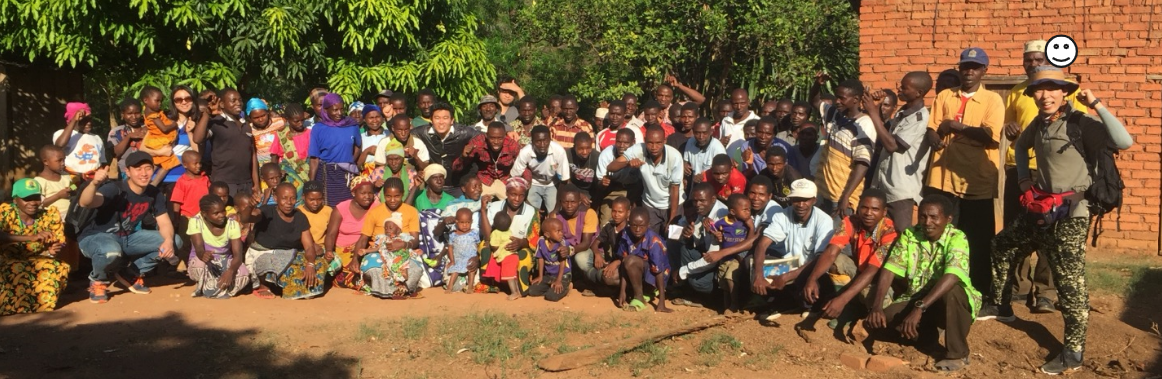
Fieldwork in Tanzania (2017)
Community agricultural assessments and climate-resilient training in Kilosa District with smallholder farmer communities.
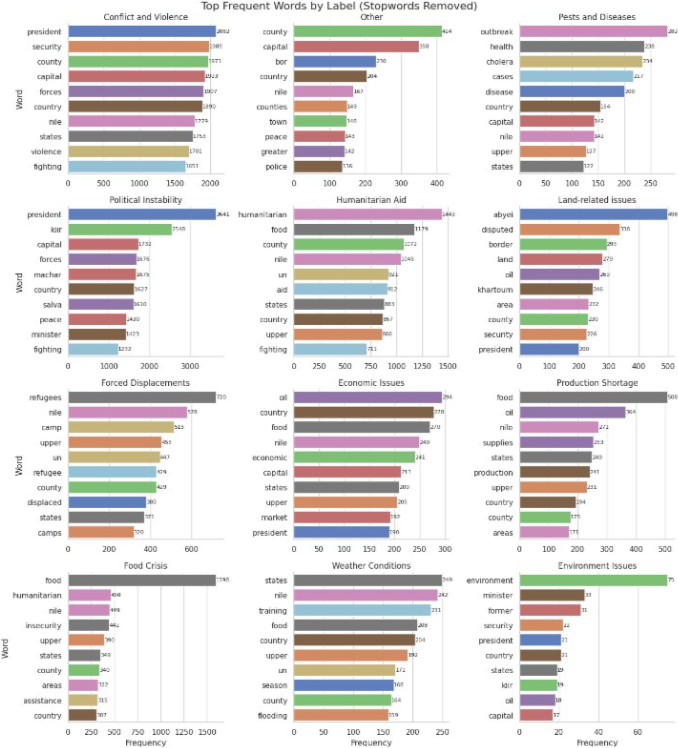
AI Media Analytics Pipeline
Geoparsing and transformer-based topic modeling (BERTopic) extracting real-time food security risk signals from 18,000+ global news articles.
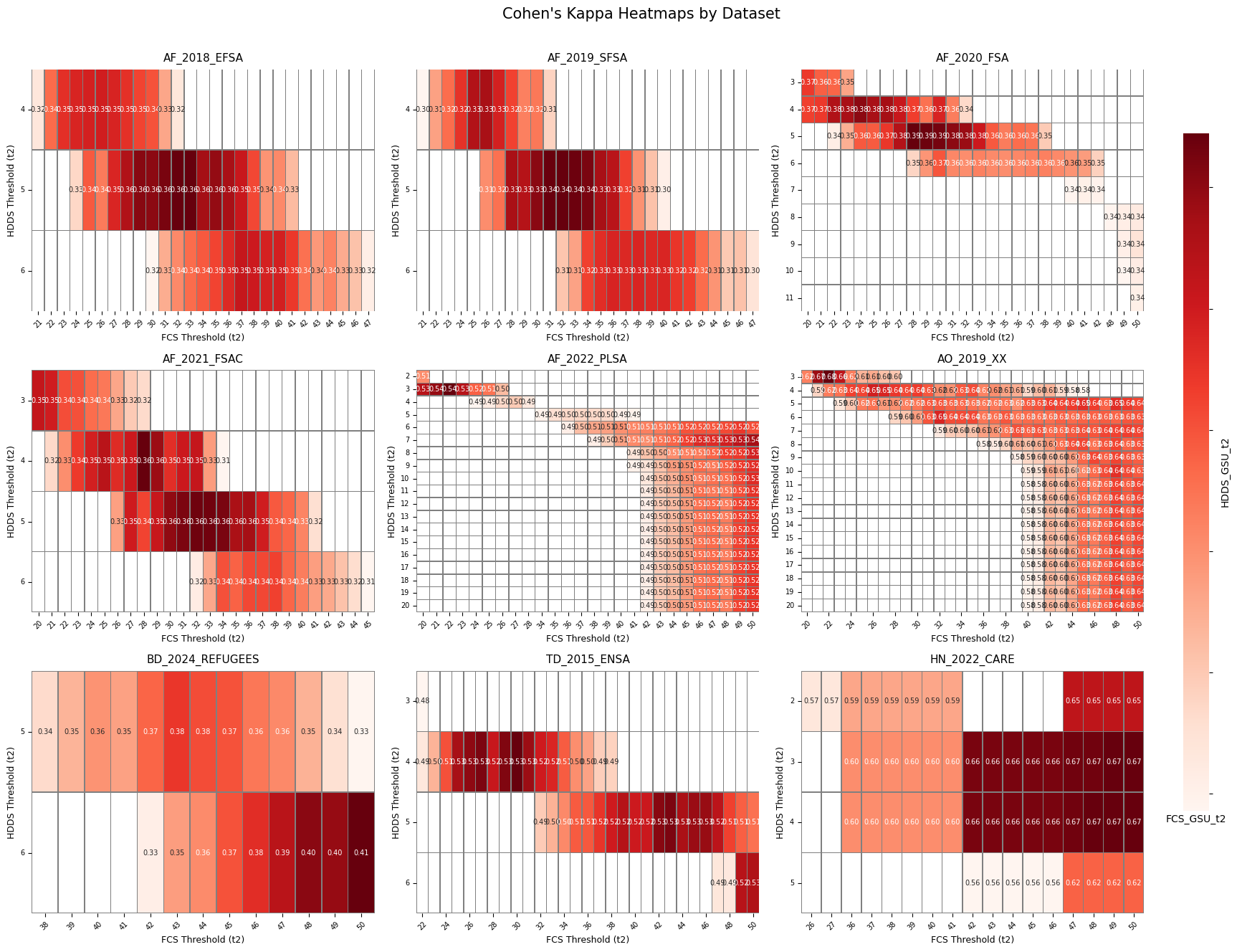
Food Security Threshold Optimization
Pairwise concordance and Cohen's Kappa agreement evaluation across 780,000+ households spanning 26 country datasets.
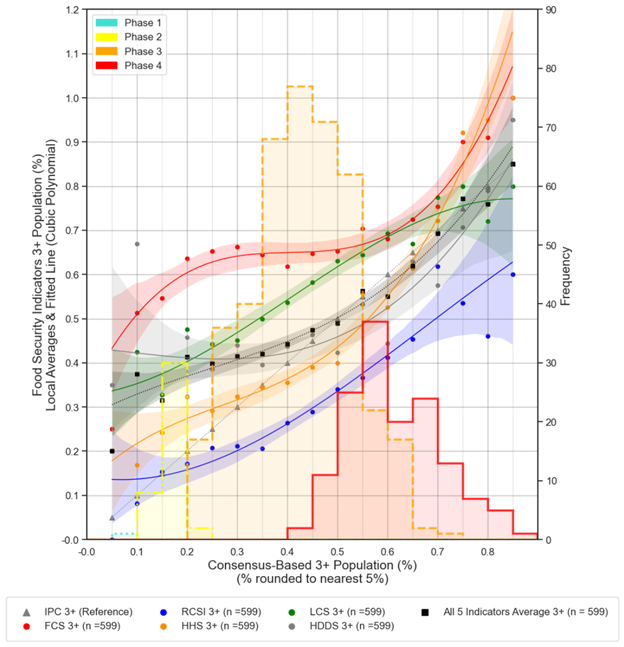
Global Crisis Assessment Inconsistency
Evaluating internal consistency between Acute Food Insecurity (AFI) and Acute Malnutrition (AMN) analytical classifications.
.png)
ML Transparency & Usability
Framework for ethical and interpretable machine learning deployment in humanitarian early warning systems.

Early-Year Dairy Prices & Nutrition
Empirical evaluation of local market dairy price shocks during infant development windows on urban and rural child stunting in Zambia.
Teaching & Technical Methods
University of Illinois (UIUC)
Teaching Assistant · ACE 251: The World Food Economy (Fall 2024)
Teaching Assistant · ACE 435: Global Agribusiness Management (Fall 2022, 2023)
Programming & GIS
Python · R · Stata · SQL · QGIS · Tableau · Git · GitHub · LaTeX · Web Scraping & API Data Pipelines
Applied Microeconometrics
Difference-in-Differences (DiD) · Event Study Designs · Regression Discontinuity (RD) · Instrumental Variables (IV) · Matching
Machine Learning & NLP
Random Forests · Gradient Boosting · LASSO · Transformer Models · Topic Modeling (BERTopic) · Sentiment Analysis
Other Activities & Recognition
Agricultural Assessments, Microfinance & Community Outreach
- Canaan Farmer School (Tanzania & Korea, 2015–2017): Served as Project and Training Officer conducting agricultural assessments, microfinance initiatives, cooperative development, and climate-resilient capacity building with smallholder farmer communities.
- IFPRI & Tufts INDDEX Project (Viet Nam, 2018–2019): Conducted field-level diagnostics and data expansion on integrated farming systems and household dietary diversity.
- Humanitarian & Community Outreach (Champaign, IL, 2020–2025): Led emergency relief fundraising for UNHCR and organized community food assistance programs.
Invited Presentations, Honors & Awards
- Invited Talks & Presentations: Cornell University CIDER Thought Summit on Data Science for Humanitarian Response (2026); Johns Hopkins Food Assistance Strategic Dialogue (2026); UNU-WIDER Development Conference (2025); Stanford University FSE Seminar (2025); AAEA Annual Meetings (2022, 2025); EAAE Congress (2023, 2025).
- Honors & Awards: Top 5 Finalist across JHU schools at AI + Health Care Idea Tank Pitch Competition (2026); ACE Doctoral Fellowship, University of Illinois (2025); Full Travel Grant, UNU-WIDER (2025); Banaba House Scholarship (2022–2024); Cum Laude Graduate, Handong Global University (2015).
Referee Service & Working Groups
- Referee Service: Active peer reviewer for Nature Food and BMC Global Health.
- Working Group Membership: Member of the IPC Advanced Technologies and Artificial Intelligence (ATARI) Working Group, global initiative enhancing food security early warning via AI tools.
- Leadership & Affiliations: Vice President, ACE Graduate Student Organization, University of Illinois (2020–2021); Member of AAEA and EAAE.